| Category | SPC Flooring | Rubber Flooring |
|---|---|---|
 |
 |
|
| Composition & Production | Made from finely ground mineral rock and nano-polymer resin. Hot-melt and hot-pressing process ensures zero formaldehyde. | Made from polymer materials such as natural or synthetic rubber. |
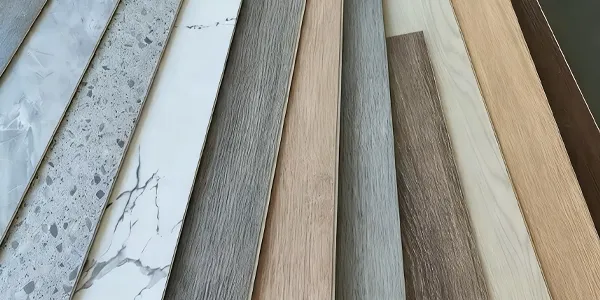
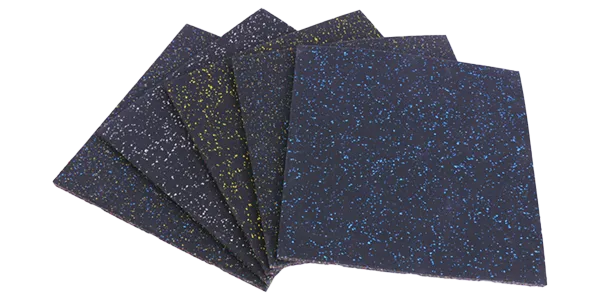
| Design & Color | Rich variety of colors, including natural wood tones and various wood grains. Customizable to individual needs. | Usually single color due to strong color absorption, difficult to customize. |
| Eco-friendliness | Environmentally friendly; produced with nano-polymers, no glue, fundamentally eliminates formaldehyde problem | Depends on type; may emit VOCs. |
| Wear Resistance | Resists rotting, swelling, and deformation in humid environments. Maintains elasticity after repeated bending. | Excellent elasticity but less wear-resistant in some cases. |
| Installation | Lightweight, easy to install, requires no special care, easy to clean, reduces maintenance costs. | Heavier, complex installation. Improper installation can cause air bubbles and requires a more rigid, self-leveling subfloor, which may exacerbate base defects. |
| Overall Advantages | Environmentally friendly, lightweight, easy to install, wide color options, high cost-effectiveness. Gradually becoming consumers' preferred choice. | Offers excellent elasticity, but more expensive, single color, complex to install, limiting its application. |
| Applications | Suitable for bathrooms, balconies, kitchens, sports venues, and other humid environments. | Limited to specific locations due to cost and installation complexity. |
| Market Demand | High demand; suitable for humid environments. Waterproof, wear-resistant, high cost-effectiveness. | More expensive, limited applicability; mainly for specific locations. |
Share your product type, application, quantity, and target market. Our team will follow up with suitable options.