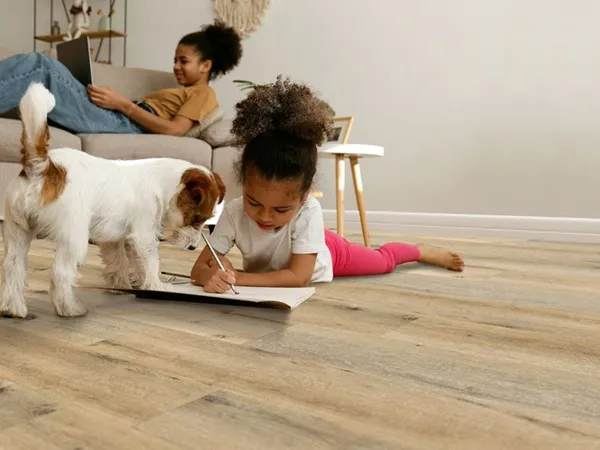
When selecting flooring, abrasion resistance is often the most important performance indicator. It determines whether the floor can retain its look and functionality under repeated use, friction, and everyday wear.
Abrasion resistance describes a floor’s ability to withstand surface damage. Though commonly grouped together, the following properties differ:

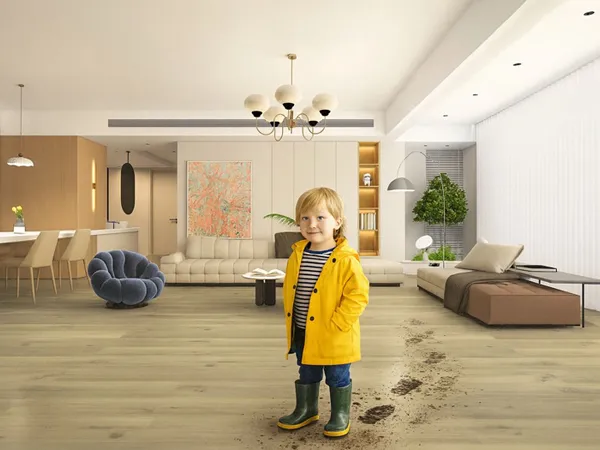
From PU/UV coatings to ceramic or alumina-infused layers, modern coating innovations significantly boost durability. Self-healing polyurethane can even minimize light scratches through heat activation.
EIR (Embossed-in-Register) textures enhance realism while helping mask minor wear for longer-lasting appearance.
High-density cores (such as SPC) resist indentation and edge wear. Precision locking systems reduce gaps and moisture intrusion.
A level subfloor, proper underlayment, and correct transitions prevent localized stress that accelerates wear.
Appropriate cleaners, protective pads, and entry mats preserve surface shine and slow abrasion.
Abrasion resistance directly affects the lifespan, aesthetics, and maintenance costs of flooring. Choosing the right floor means evaluating not just thickness or materials, but also coatings, structure, installation quality, and intended use scenarios – ensuring reliable, long-term performance.
Share your product type, application, quantity, and target market. Our team will follow up with suitable options.